
From Philly and the Pa. suburbs to South Jersey and Delaware, what would you like WHYY News to cover? Let us know!
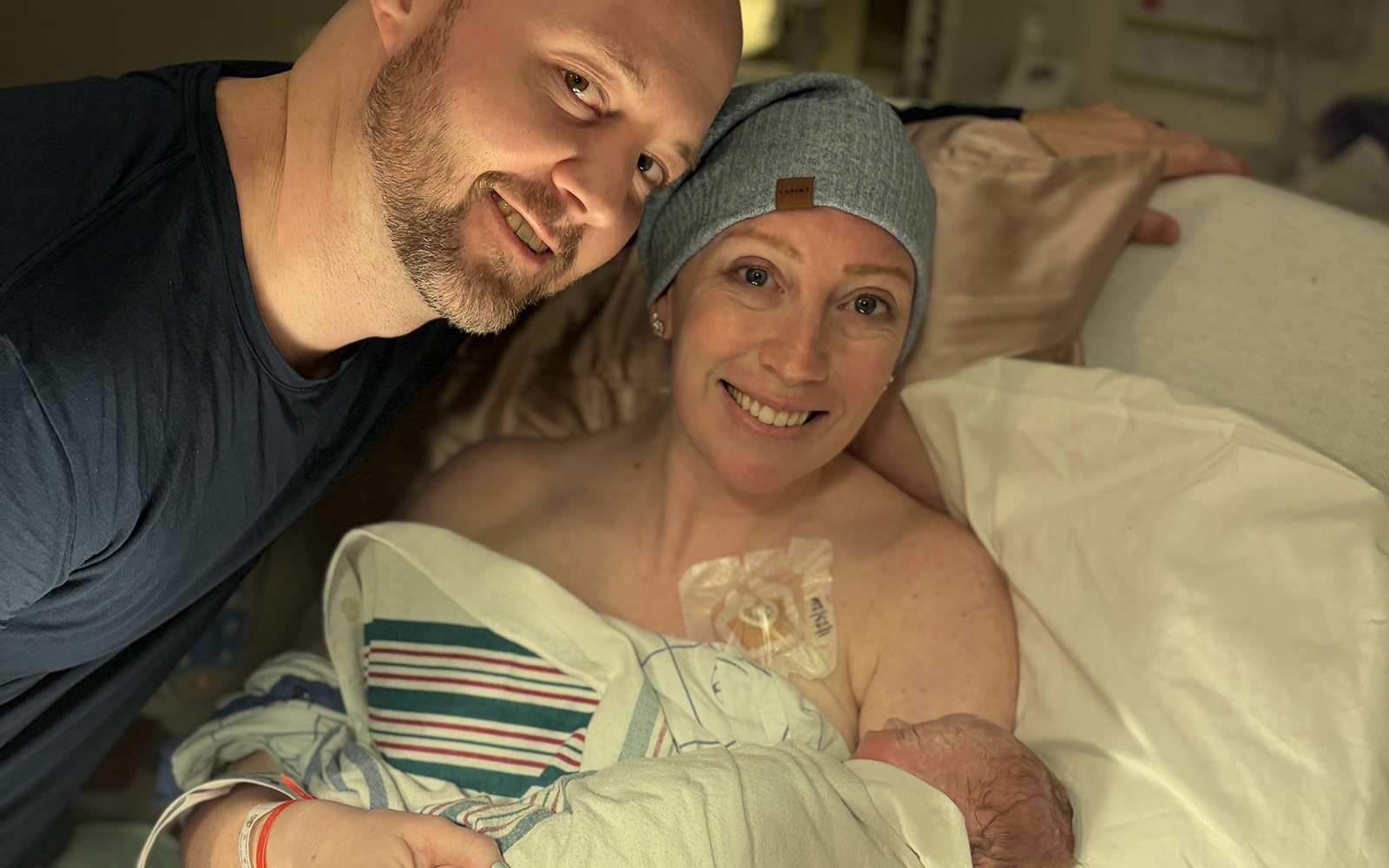
Last fall, Carolyn Searles had just returned home from a weekend getaway to celebrate her 36th birthday when she noticed a “golf ball-sized lump” under her arm.
At the time, she was 16 weeks pregnant with her and her husband’s second child, a “miracle” baby after in vitro fertilization and two miscarriages.
The sudden appearance of the lump prompted Searles to quickly seek out testing and a biopsy – hoping for the best but fearing the worst. Breast cancer ran in her family, and years ago, she had tested positive for a genetic mutation that put her at high risk.
“The next day, I found out that it was malignant while I was sitting in the ultrasound chair with a new sonogram of my perfectly healthy baby boy,” she said.
The devastating reality of the situation began to sink in.
“I was absolutely despondent,” said Searles, who lives in Wallingford, Pennsylvania with her family. “I was scared that I wasn’t going to be able to carry out the pregnancy and be able to get treated. And I kind of kept that fear to myself because it was such a deep dark nightmare after everything we had been through.”
Breast cancer during pregnancy is still considered uncommon, occurring in roughly one out of every 3,000 pregnancies, according to the National Cancer Institute. But cases are becoming more frequent, national data shows, as more women have babies at older ages, when risk for all cancers increases.
In the past, doctors and health providers were more likely to recommend that women delay cancer treatment until after childbirth to avoid possible toxin exposures and safety risks to their unborn babies. Some may have suggested terminating the pregnancy to begin aggressive therapy sooner.
But more research in the last couple of decades has shown that treatments like chemotherapy and surgery can be done successfully during pregnancy, and in a way that is safe for the babies.
Despite the long fight ahead of her, Searles said it was a relief when doctors told her that based on research and other patient outcomes, they were confident she could safely begin chemotherapy in her second trimester, which would give her the best chance of delivering a healthy son and beating the disease. It’s something she feels more cancer patients need to hear about.
“To have the medical professionals so confident that there is a way to treat you and not affect the baby, it should be known,” she said.


